
The Ancient History of Sound (And Why We Use It to Heal)
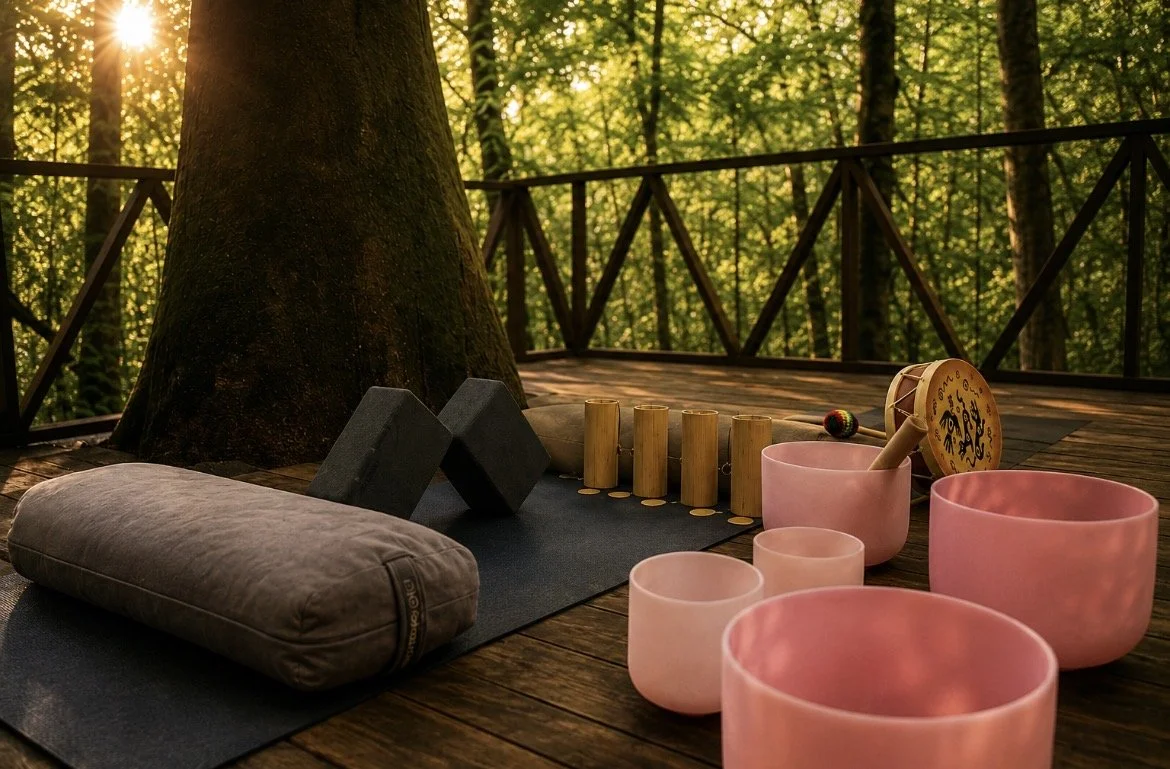
Sound can slow down the heart rate and calm the nervous system in seconds. It doesn't just enter through our ears, it resonates through our bodies on a cellular level.
Humans have understood this for thousands of years, from Egyptian priests chanting in temples, to Siberian shamans using drums to communicate with the dead. Sound is one of the oldest forms of medicine we have.
A practice older than memory
In ancient Egypt, priests chanted inside temple chambers built specifically to amplify sound. In Greece, Pythagoras spent much of his life studying the mathematical relationships between musical tones. He believed specific intervals could restore balance to the body and mind, and prescribed music the way a doctor might prescribe medicine.
In Peru, researchers studying the 3,000-year-old temple of Chavín de Huántar found something remarkable: the building itself was engineered for sound. Its narrow stone passageways were shaped to carry the tone of conch shell trumpets, called pututus, from deep inside the temple out to the crowds gathered beyond it, while distorting the sound just enough that no one outside could tell where it was coming from.
Further north, the Aztecs shaped small clay whistles into grinning skulls. Blow into one and it doesn't produce music, it produces a scream. Archaeologists believe these "death whistles" were used in ritual, possibly to accompany the dead into the underworld or to unsettle enemies in battle. Recent brain scans on modern listeners found that this sound lights up the same regions associated with fear and threat. Three thousand years later, it still works exactly as intended.
In northern Australia, art depicts Aboriginal people playing the didgeridoo more than a thousand years ago, used in ceremony to heal the body and to connect the living with ancestors. Across North America, Indigenous nations have long used drumming and chanting as central parts of ceremony, understood as a way of restoring rhythm to a person, or a community, that had lost it.
And if you want the far edge of this history, there's a legend about places like Sacsayhuamán in Peru, an ancient stone wall built from multi-ton blocks. The legend claims that ancient builders used chanting and sound to actually move and levitate those stones into place. As of now, there's no real evidence for it, but versions of that same legend show up in cultures worldwide, which says something about how deeply we associate sound with power.
Different continents. Different centuries. Same conclusion: sound isn't just something we hear. It's something we feel, and it has the power to create profound experiences.
Sound as a doorway to other worlds
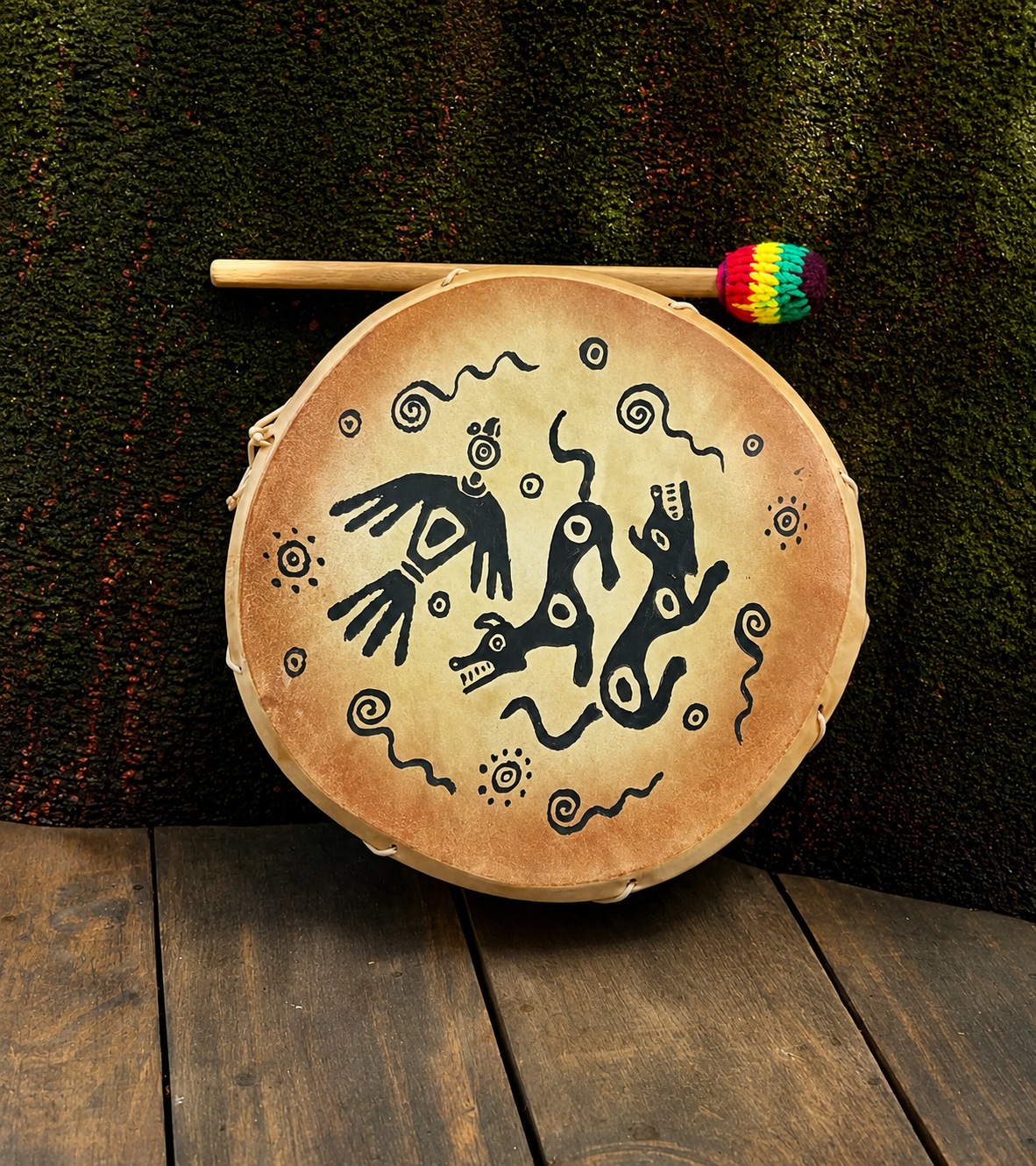
In many traditions, sound was used to transcend worlds and send people somewhere else entirely.
Among Siberian and Mongolian shamans, the drum isn't a musical instrument so much as a vehicle. A shaman beats a steady rhythm to leave ordinary awareness into what's often called non-ordinary reality, a place to retrieve lost parts of a person's spirit, speak with ancestors, or guide the dead onward. Archaeologists have found drums used this way in ritual for roughly six thousand years, making it one of the oldest spiritual technologies we know of.
That idea, that a specific rhythm or tone can carry you across a threshold most of us can't otherwise cross, shows up again and again across cultures that never had contact with one another. It's one of the things I find most incredible about this history.
Long before anyone had the language for altered states of consciousness, people had already figured out that sound could get them there.
Why sound actually does something to you
Here's the part that isn't mystical at all: sound is vibration, and vibration is physical. When a sound bowl or drum is played near your body, the sound waves move through you the same way they move through air, through your skin, your bones, your heart. That's not a metaphor. It's physics.
Researchers have also found that steady, repetitive rhythms, similar in tempo to that shamanic drumbeat, can shift brainwave activity into slower patterns associated with deep relaxation, meditation, and even trance. That shift matters, because it's very hard to consciously think your way into that state. Sound seems to nudge the body there without the mind having to do any of the work, which is part of why it can feel like it bypasses your usual defenses.
Ancient healers didn't have this language. They didn't need it. They just noticed, over and over, across cultures that never spoke to one another, that sound moved something loose in people. Science is mostly catching up to what they already knew.
What to expect during a sound bath
There's no experience required. You lie down and close your eyes. A practitioner moves through a set of instruments, often crystal or metal sound bowls, chimes, rattles, sometimes their own voice, layering tones that shift slowly.
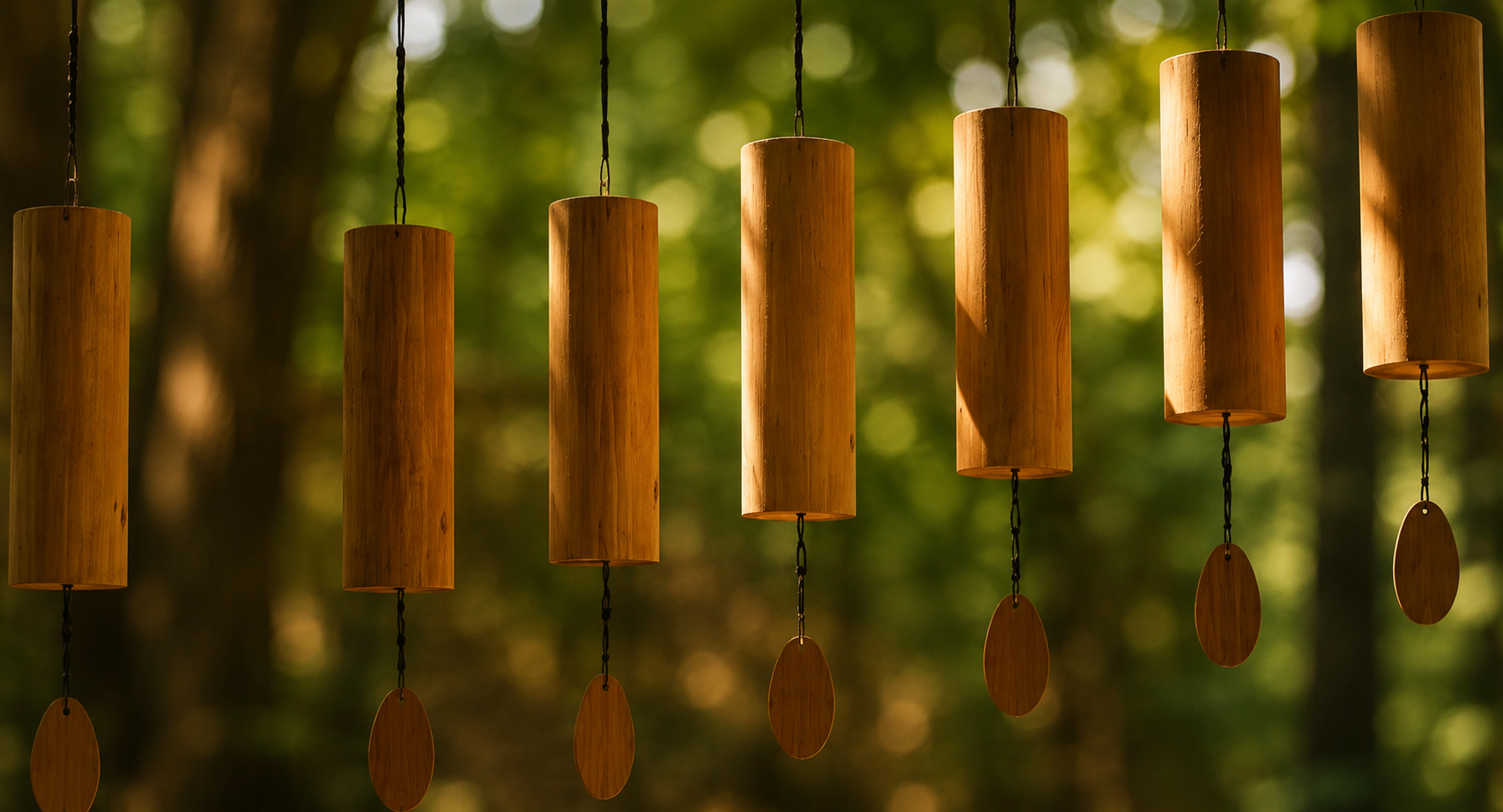
You don't have to breathe a certain way or think a certain thought. Most people drift somewhere between waking and sleep, a hazy state where thoughts loosen and time stops behaving normally. Some feel warmth or tingling move through the body. Some see color or shapes behind closed eyes. Some cry. Some fall asleep and wake up when the room goes quiet again. All of it is normal.
Afterward, it's common to feel a little foggy, like waking up from a long nap, along with a clarity that's hard to describe until you've felt it.
Sound at Moonwake
Everything about a Moonwake retreat is built on the idea of returning, to nature, to community, to yourself. Sound fits naturally into that. It isn't a modern wellness invention we borrowed to feel exotic. It's a ritual as old as the people who first gathered around a fire or a drumbeat, looking for the same thing every one of us is still looking for: a way back to ourselves. When we build sound healing into a retreat, we aren't introducing something new. We're returning to something ancient, and letting it do what it's always done.
Sound healing is one of the modalities we return to again and again at Moonwake, often paired with breathwork, movement, or ritual, because it works quietly and it works fast. A bowl rings out, the air around you starts to move, and something in your body settles before your mind has caught up to why.
Ready to experience the power of sound? Learn more about our April 2027 Tulum retreat.